Showing posts with label Health. Show all posts

Saturday, February 11, 2017

The succes story of Bilal Mumtaz || Director Sehat

Leave a Comment
“Shortly after graduating from University of Western Ontario, I was left with the daunting task of finding a job to support myself. Having previously completed internships in the realms of statistical research, journalism and advertising, I decided it was fitting to take up work for a startup in Canada dealing with discount options for retailers, through an app and physical POS device. Though the startup was short-lived, it taught me a lot about delving on to a career that re...quired intensive communication and sound business development planning.

The succes story of  Bilal Mumtaz ||  Director Sehat

After I left Canada for Pakistan, Sehat was in its second year of R&D, having been formed as a project between myself and my four elder brothers. It was up to me to launch the entire operations within a space of four months - we already had the warehouse facility, procurement contracts, logistic partnerships and team in place. However, I too had a fair share of many struggles as an entrepreneur. It's always the most difficult thing to change the culture of a workplace. Ideally, one should be happy with what they're doing and not focus on petty internal issues or competitors against them in the same space.

Whenever you are trying to bring something new and novel to an ecosystem, many will have doubts about your service and feel that you are simply "wasting your time". I had the door slammed on my face many times when I was initially marketing Sehat to doctors, potential customers, and business partners. This was a mere few months before the internet boom really took e-commerce to new heights. Since then, everyone in my team has been working diligently to make Sehat a household name. I don't see that day being that far now, to be frank. My entire journey of struggles reminds me of one quote I strongly believe in:
‘First they ignore you, then they laugh at you, then they fight you; then you win.’” – Bilal Mumtaz, Director Sehat
Read More...

Friday, February 10, 2017

Dr Anum from Peshawar telling you some thing ....

Leave a Comment
Meet Dr Anum from Peshawar add her Dads Pearl on facebook
Im a doctor, but Im a human first!
I am a doctor and every day I treat people suffering from life-threatening to common diseases. Occasionally, I fail to save someone from dying while many a times, I am able to see my patient recovered and healthy and kicking over the time.
There have been cases where my treatment, reinforced by costly medicines, has saved young and old lives; there have been instances when my best efforts have failed to keep patients alive. That is what the life is. There have, however, been certain instances when innocent people left the world just because of their attendants’ inability to afford the costly medicines. These deaths grieve me and I feel the world killed them and the whole world is guilty of letting them go.
I am Dr Anum Rahman, and I believe doctors’ attention and medicines can heal the wounds but poverty can be hindrance to their recovery route.
Being a familiar to patients’ financial miseries, I have launched a ‘help-the-patients’ campaign with my own sources and friends’ help.
I am 26-year-old, a graduate of the Peshawar Medical College.
What inspired me to work for the poor patients?
The journey started last year in the summer when one day, while at work, I noticed a patient of Hepatitis C was reluctant to go for monthly interfernos. When I dug into the issue I found the patient was also suffering from chronic poverty. I decided to help the patient. Let us call the patient a patient as I do not want to reveal gender and information of the person. I invited my friends and colleagues to share the pain. The response was riveting. Money started pouring in. I, with her friends, set up a stall at a local college funfair event and collected Rs 51,000. Many people offered to sponsor the patient.
Since then, I with my friends have helped more than 200 patients visiting the Peshawar hospitals.
The element of philanthropy, generosity and empathy is in abundance, and the only thing which they need is transparency, clarity and trust. Following these principle, I have gained the trust of group of over 50 people, who on her call help the needy patients.
The government does not and cannot help all poor patients, those who can afford ought to help the poor because money is not everything. The greatest from of wealth is human connection and human interaction,” she says. “It's one of most influential currencies in the world. We never know if the next great is waiting on streets is a homeless sick. If we don’t help these people, we may never see the great value that some could bring to making our world a better place.
Whenever I come across a patient in need of money for their treatment, I get an estimate of the treatment, and share it with friends on social media.
Every religion in the world asks its believers to help those in need. People can help us if they know any deserving patient who's disease is treatable for whom we can provide a plan to get treated. They can help us raising funds from their respective communities and can take such steps so that others may get inspired. 40 percent of all deaths are preventable and Pakistan ranks the 111th, out of 169 countries, on maternal and 184th on prenatal mortality, and 10 percent of the world’s child deaths under five years are in Pakistan.
The data is horrible. So is the cost of medical treatment.
Not all treatments are expensive but most of them are, and it depends on person to person, from what socio-economic status they belong to. For some, millions do not matter, and for many a rupee matters a lot.
Though I have helped so many patients, I have regrets which make me often sleepless.
Due to this I incident, I eventually started hating life. A young man, around 28 years old, with road accident injuries was admitted to the ICU. He was on ventilator as he was not breathing properly. With the passage of time, the attendant asked the hospital to wean off the ventilator as they were no more able to pay daily vent charges and that patient died on the way back to home.
Ohmygod, how I come I couldn’t save that life?
I am a Pathan girl. In my professional life, I have broken so many stereotypes. I would love to see my other Pathan sisters to join the humanitarian work.
Come on, if I can do it, you can do it too.
We all can do it.

#CEO charity dosent hurt
# ambassador for preservation
# ambassador world's smile archieve
# cordinator kpk asain students medical association
# Cordinator kpk for health awareness
#associate member pakistan Islamic medical association
# member national young scientist Academy
# media secretary social welfare society
# public speaker


Read More...

Thursday, January 26, 2017

Health experts : ‘Naswar’ is one of the leading causes of oral cancer

Leave a Comment
Health experts apprised that use of ‘naswar’ is one of the leading causes of oral cancer. According to official statistics, more than 70% of the people in Khyber Pakhtunkhwa are in the habit of chewing Naswar.
“Brushing and cleaning teeth is essential for our healthy life, also stressed as part of our daily routine by Prophet Mohammed (S.A.W)”.
According to central media cell, it was stated by Dr Abdul Malik, Central PIMA President, Dr Masood Khan and Dr Muhammad Shafiq in a free dental clinic & awareness seminar held by PIMA Dentistry at AGOSH for orphans at Peshawar on Thursday.
PIMA dentists examined, prescribed and gave the teeth care tips to more than 93 children. Participants were also advised to avoid Naswar, Pan, Chalia, Smoking, Gutka and clean the teeth every day before sleeping


Health experts : ‘Naswar’ is one of the leading causes of oral cancer

Health experts : ‘Naswar’ is one of the leading causes of oral cancer

Health experts : ‘Naswar’ is one of the leading causes of oral cancer


Health experts : ‘Naswar’ is one of the leading causes of oral cancer

Health experts : ‘Naswar’ is one of the leading causes of oral cancer
Read More...

PIMA offered services for awareness & treatment of the youngs suffering drugs addiction

Leave a Comment
Dr. Abdul Malik, President PIMA

Dr. Abdul Malik, President PIMA has expressed deep concern over the increased use of drugs by students in schools and higher educational institutions.
He said that strict actions to be taken against those persons who are involved in spreading the drugs.
He urged the Govt, institutional administration, parents and media to play their role to discourage the drug use by prompting the awareness on mass level. He offered the PIMA services for awareness campaigns, education and treatment of the young people who suffering from the diseases by using drugs.

Read More...

PIMA Relief : “Health and Hygiene" kits ditritbuted in Peshawar

Leave a Comment
“Health and Hygiene Project” of Pakistan Islamic Medical Association ( PIMA ) Relief Peshawar moved into the last phase by distributing of Women & Child Survival kits among 300 families.
These families located in the project areas and around, who are totally neglected by public, private and international development agencies.
Each kit is comprising components for ARI and pneumonia prevention (caps, socks, sweaters and footwear for infants, under five, adult females and males), hand washing (toilet soaps), de-worming agents for children with hematinic and folates for pregnant and lactating mothers

PIMA Relief : “Health and Hygiene" kits to ditritbuted in Peshawar

PIMA Relief : “Health and Hygiene" kits to ditritbuted in Peshawar

PIMA Relief : “Health and Hygiene" kits to ditritbuted in Peshawar
Read More...

Wednesday, December 14, 2016

PM Punjab Presided a Meeting Over Health Reforms

Leave a Comment

Punjab Chief Minister Shehbaz Sharif presided over a three hours long meeting earlier today which reviewed in detail steps for public health reforms programme especially elimination of spurious and substandard medicines. The meeting decided to amend Drug Act 1976, under which, punishments will be made deterrent against those involved in manufacturing and sale of fake medicines and fines will be increased for curbing such elements. The meeting gave approval to setting up of Drug Regulatory Authority. Addressing the meeting, the Chief Minister said that spurious and substandard drugs will be eradicated at all costs from the province.
PM Punjab Presided a Meeting  Over Health Reforms
 
Read More...

Friday, November 11, 2016

Checking Finger Mark During Lot Quality Assurance Survey (LQAS): EMPHNET

Leave a Comment

Tirah, Landikotal of Khyber agency is a newly opened area for polio campaigns after military operation. Anxiety among polio workers is still present due to fear and threat and the same happened with me during LQAS survey. This was a very far-flung and hard-to-reach area touching Afghanistan border, where I conducted LQAS. The only child below 5 years was brought by his elder brother who was playing cricket outside his home with friends. The child finger mark was checked and found vaccinated. The children wished for a group picture
.
 — at Khyber Agency.


Read More...

Tuesday, August 30, 2016

First Regional Blood Center of KPK has been Established in Peshawar

Leave a Comment
First Regional Blood Center of KPK has been established in Hayatabad Peshawar. The Ministry of Health KPK has made this in Collaboration with Germany. In second Phase such Regional Blood Center will be made in 3 more Districts Swat D.I.Khan and Abbottabad


Kausar Shah Gailani Now this is called the planing. After establishing this in capital city Peshawar the rest three in abbotabad, D I Khan and swat will cover the whole province and from east to west, north to south everyone would have this amazing health facility almost on their door step. Thanks alot to provincial and German government for all this
Read More...

Friday, August 12, 2016

Dr.Haleema Sadia Qazi : A Lecturer in Dentistry Department Ayub Medical College Abbottabad is on Leave from the Last 8 Years

Leave a Comment
Dr.Haleema Sadia Qazi is a lecturer in Dentistry department Ayub Medical college Abbottabad. She is on leave from the last 8 years and working in PIMS Islamabad.....She occupied two government post at same time....The BOG chairman of MTI Abbottabad again grant her one year leave.....In the same institute many lecturers have to resign from the post due to rejection of application for leave.....
The high authority of Khyber Pukhtonkhwa should consider the Annia wo Nagar satiation in MTI Abbottabad.


Read More...

Thursday, August 11, 2016

Meeting Held for Alkhidmat IMANA Hospital Project in Quetta

Leave a Comment
Quetta, 11-08-2016: Alkhidmat Foundation’s Regional office Balochistan arranged a meeting. The meeting was presided over by Mr. Syed Ihsan Ullah Waqas (Senior Vice President Alkhidmat Foundation Pakistan) and Dr. Muhammad Mushtaq Ahmed Mangat (Secretary General Alkhidmat Foundation Pakistan).
Syed Abdul Haq Hashmi (Ameer Jamaat- e - Islami Balochistan) , Syed Tariq Suleman Rizvi (Secretary Finance AKF Balochistan ) , Engineer Jameel Ahmed kurd (Secretary General AKF Balochistan) , Mr. Muhammad Asim (President AKF Balochistan) , Prof. Abdul Wahid Nasar (Vice President AKF Balochistan) , Mr. Ijaz Mehboob (Director Education AKF Balochistan) , Mr. Hikmat Mengal (Regional Manager AKF Balochistan ) , Mr. Muhammad Hussain (Deputy Secretary AKF Balochistan), Hafiz Noor Ali (Secretary General Jamaat e Islami District Quetta) & Engineer Wahid Buksh (Engineer IMANA Hospital Project) also participated in the meeting.
The participants discussed the progress of Alkhidmat Foundation’s IMANA (Islamic Mission Association of North America) Hospital Project which is a project of 61 million cost. The project will start over from 25 million. Fund raising for the IMANA Hospital was also discussed. The team also discussed the progress of various other on-going projects. A special prayer session was also held for the martyrs of the recent Quetta blast.
Alkhidmat Foundation’s IMANA (Islamic Mission Association of North America) Hospital Projec

Alkhidmat Foundation’s IMANA (Islamic Mission Association of North America) Hospital Projec

Alkhidmat Foundation’s IMANA (Islamic Mission Association of North America) Hospital Projec

Alkhidmat Foundation’s IMANA (Islamic Mission Association of North America) Hospital Projec

Read More...

Tuesday, August 9, 2016

Recently build/Upgraded Buner Medical Complex Buner KPK.

Leave a Comment
Recently build/Upgraded Buner Medical Complex Buner KPK.

Recently build/Upgraded Buner Medical Complex Buner KPK.


Read More...

Wednesday, August 3, 2016

Why Sleeping Early is So Important for Health ?

Leave a Comment
That's how Allah has made us... Sleep at night and work during the day...☺
Today I learnt something new... A natural cancer vaccine 

Allah says: (We have not sent down to you the Qura'an that you be distressed) 20:2...😇

Allah  placed in each and everyone of us a gland in our head called the Pineal gland, it is considered to be the biological clock of the human body and it is also connected to the sight nerve. It is so small like the size of a pea.🙃 Everyday after isha this gland starts producing a substance called Melatonin which runs in the bloodstreams and protect the body from cancer. 😋

This gland works only in the dark so if the eye is exposed to the light the gland does not work because it thinks the night has not come yet...🤔

So if you stay up at night in the light you are depriving your body from this daily vaccine... ☹
Allah says: (We erased the sign of night and made the sign of the day visible) 17:12...😇

Unfortunately, we nowadays made the sign of the night more visible than the sign of the day by staying up all night and sleeping all day.😢
Our parents and grandparents who used to sleep early in the night and wake up early in the morning did not suffer from cancer or any of the disease we hear about today...😌

A study was done on to types of chicken farms, a natural breeding type where chicken sleep early at night and wake up early in the morning to feed and an artificial one where they wake the chickens at night for feeding...🐓

The results were 30% of the artificial farming chickens were diagnosed of cancer🤒
while the natural farming chicken were completely healthy and clear from any disease...😃

Allah has placed this daily vaccine in our body to protect us so let's put it to use by sleeping early.💪

The gland starts working from after isha until two hours before fajr!!!🌞

Subhana Allah as if its telling us two hours before fajr is the last third of the night 😄
Follow your guide and your manual (the Qura'an) and you will always be fine...🤗🤗🤗
InshaAllah

Cancer remedy proved from hadith and elaborated by science... 🤓
Must read and share this miraculous physiology Allah designed inside man... 😊😊😊
Read More...

Tuesday, August 2, 2016

Cancer Hospital of 500 bed capacity to be made in Islamabad

Leave a Comment
Cancer Hospital of 500 bed capacity to be made in Islamabad which will cost 21 Billion rupees. The Feasibility of the hospital has been completed already
Mrs. Saira Afzal Tarar Minister of State for National Health Services.


Read More...

Monday, August 1, 2016

Difference between Organic and Regular Chicken?

Leave a Comment
More and more organic products are coming to market. Organic food sales increased almost sevenfold between 1997 and 2016. . In the meat category, organic chickens are raised far differently than regular chickens. The feed for organic chickens must be grown without chemicals or genetically modified organisms. The chickens must be free-range, which means they are allowed outside. They also must have more living space than conventionally raised chickens. As a result, you will find some differences between eating organic and inorganic chicken.

ORGANIC Chicken


  • 1 ) ORGANIC chicken feed contain chemicals use for rapid growth .After eating this meat Dyspepsia burn in chest and peptic ulcer is common.
  • 2) ORGANIC chicken is given hormones and steroids  for rapid growth . After eating meat  will result bad effects on health. Peptic ulcer decrease immunity of body,Fighting abelity of body against diseses will be less.So frequently he/she will feel, more chances of liver disease. 
  • HORMONES result changes in hormonal system of body resulting more chance of disease like diabetes in both male and female AND OBESITY.,hormone in female disturb their female  hormonal system and interfere periods etc.
  • 3) ANTIBIOTICS is  given too much and in last days before selling so antibiotic resistance in persons eat meat increases .  THIS IS VERY DANGEROUS FOR HEALTH OF PERSON.
  • 4 ) Steroid given in  last week increase water quantity in body as side effects of steroid. Loss of BUYER AS WHEN this chicken put in fry pan water is lost .HEALTH hazard is also problem.
Regular Chicken


  • 1 ) Feed free from chemicals.Steroids and Hormones Is not given so there is no chance of gastric disease ,liver kidney diseases ,body immune system not effected, No Hormonal effects in females.
  • 2) RESULT OF GOOD FOOD .NO STEROID.HORMONES etc  IT IS TENDER AND TASTY TO EAT.
  • 4 ) Economical in the  sense that when you buy it is full meat not meat + water.Like other chicken. 
 Fresh & Healthy,  Free from Chemical, Free from Harmon,  Free from Steroid
Read More...

Thursday, July 28, 2016

To live a happy life is a skill ~Motion and Energy

Leave a Comment
To live a happy life is a skill that not many people possess. You can also have a problem-free , happy mind if you follow Seem’s Steps  

“I want to be successful in life “BUT” I can’t no, I can, I can’t, I can ……Oh Lord what is happening with me? Why I’m so confused?
Motion and EnergyThis is the problem most of us are facing most of the time. But this problem can be solved. What we need is guidance. But how? Let us discuses.
Plan things to look forward too:
Having something to look forward give you energy to work toward your goals, so plan something every day. Whether it is a chat with a friend or a run in the park and plan at least one big thing every month.

Stop putting things off:  
You know all those thing that annoying you. But you never got around to sorting? From dripping taps to recurrent row with your partner or friend-drain your energy as your inability to tackle them make feel your failure. A huge list can feel overwhelming.  So make a list that’s doable and prioritize it. Give each item a deadline and put it in your dairy. If a task is very consuming, break it into steps and do 15 minutes each day. Dealing with that relationship niggle now, before it become a full –blown problem will free up emotional energy to spend on the thing you really want to do.

Don’t try to please
We all like to liked, but when you give constantly without getting anything back. You drain your emotional energy Often some people always try to please other rather than themselves , but you have to be true to yourself and then keep your integrity. Listen to other point of view. Then make your own mind. Make a list of the entire things that you want to do and then do one a day.

Hang out Only with Positive People
You know that feeling when a friend calls and your heart sink because you shall spend an hour listening to her/his relationship or work problems again? It’s not that you don’t want to help but a friendship is supposed to be two way process and call leave you feeling like an unpaid therapist. Some people have a tendency to drain you of all your happiness and energy. Emotion are contagious so their pessimism will bring you down. If you want to catch optimism. You need to associate with positive people. Make a list of five people who build you up. Make you laugh and whose optimism is infectious. Then make a decision to nurture those relationship by calling or meeting up with people at least one a month.

Don’t dwell on what might have been
Thinking constantly about your past will take up all of your emotional energy, leaving you none for the present.
If you learn from your mistakes which is very important. But if you keep regretting something that you can’t change you have to let it go and move on.

By Seema Siraj

Khyber Medical College Peshawar, Pakistan 
Read More...

Saturday, December 5, 2015

Poor medical services in HMC Peshawar

Leave a Comment
Provision of quality medical services in state run government hospital is still a dream and no one knows when it will be a reality. Today I was in Neurosurgery ward HMC to enquire about the health of my relative admitted in the hospital. In the evening after Maghrib prayer a kid of about 3 years age was brought to the ward in a very critical condition having head injury and internal bleeding. There was only one TMO in the ward on duty, who tried to provide emergency treatment to the struggling kid, I was watching this little angel full of grief for his sufferings and was constantly praying for his life. The hospital was having no ventilator to help this little angel breath, No senior doctor, consultant to check the condition of the kid, no other necessary equipments for emergency treatment. The condition of the kid was very critical and was shifted to RMI for quality treatment due to lack of basic medical equipment at HMC. Still I am thinking about that kid, May Allah grant him with success and recovery.

By Sahib Zada Arshadullah
Read More...

Friday, January 30, 2015

What Other Provinces Can Learn from Punjab

Leave a Comment
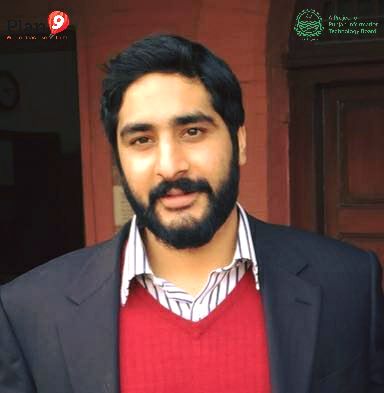
Technology play a great role in solving problem of modern age. The scope of the solution is unlimited but effort and vision is required. The Punjab Governed left no stoned unturned when it comes to facilitate public unlike other provinces.
 A lot of the credit to this change can be given to the Punjab Information and Technology Board (PITB), headed by the Chairman Dr Umar Saif since 2011. Saif - who received his PhD from Trinity College, Cambridge - also serves as the Vice Chancellor of the Information Technology University in Pakistan, after a four year stint teaching and working at MIT.

The Pakistani province of Punjab holds more than half of the country's population and in 2011 it was facing a dengue epidemic, with 21,000 cases and hundreds of fatalities. Part of the problem was the haphazard of digitisation of records, which made it hard to co-ordinate work across departments. The solution that the PITB came up with was to create a smartphone application that could be distributed to workers and officials in the various government departments engaged in tackling dengue. The app was used to track the work being done to fight the disease, and to also map the spread of dengue.

 Saif shares his insights into the challenges of bringing a technology solution to a government problem.
"Historically, IT departments around the world have stuck to using personal computers as the platform for their solutions," Saif explains, "and this has some fundamental flaws. Governments spend billions buying the hardware and software, but the uptake of technology is very low."

"The bureaucracy - particularly the lower tiers, are not computer savvy, and PCs have a lot of infrastructural needs," he adds. "And a senior bureaucrat will often not want to use the computer either, and just gives it to an assistant in a back room. That's the state of things in Pakistan, and I suspect, in countries like India too - such devices are used more as typewriters."
To work around these constraints, the PITB invested in Android smartphones - cheaper ones for the lower level staff, and high-end ones for the senior officials - and distributed these devices with a few work-related pre-installed apps along with some paid for talk time and messages.

In 2011, when Saif joined the PITB, smartphone penetration was growing fast, and the networks were growing as well. With their own batteries and wireless connections, phones solved one of the bigger problems that PCs faced. But more than that, Saif says that the phones also come with "social value."

"You can call friends and family, watch a film, or play games on the phone," says Saif. "They're intuitive, and everyone wants to use one, so they won't get handed off to an assistant. So with the hardware taken care of, we [the PITB] could focus our efforts on developing smartphone applications for automating government work."

The PITB team would go on to develop an automated platform with which they could crank out simple, template-based apps for government departments in minutes, based on the queries that each department needed to track, but the first stage - after convincing an extremely sceptical bureaucracy - was making the dengue tracking app.


The app needed to be able to track the location of each report, save pictures both before and after interventions to measure their effectiveness, and also share this information to a centralised database. This helped the team in locating the epicentre of the disease, and tracking the aedes larva. To do this, the PITB equipped the field workers to track the containment activities, so that all incidents, larvae, and control activities could be viewed on a map to track trends and developments.
"We bought 1,500 smartphones and giving them out to different government departments," says Saif. "So everything you [the workers] do, go to a house, or do some fog spray, or use the chemicals to kill the larva in a pond of water, or you clear a puddle of water, or shred some tyres, or you are putting some fish in a pond, which will eat the larva, any such activity; [the workers] take a before and after photo, which geotags the activity, and time stamps it. We have entomologists who go around looking for the larva, and they geotag their findings as well. We use this as a predictive tool to figure out where the patients will come from. We also geotag the houses of the confirmed patients; the system carries out statistical analysis, and raises alerts and highlights that on the map and automatically messages the district staff as well."

This also solved one of the big issues that had been facing the different departments - staff accountability. Since all the work is being geotagged and time stamped, if there is any lacuna, it is possible now to zero in on the exact area and time where photos needed to be checked. Accountability was in fact the biggest selling point to many of the heads of departments, to get better insights into the work their staffers were doing, according to Saif.

The project was a success - dengue is no longer at epidemic status in Punjab - and with World Bank funding, the core idea has been rolled out to multiple functions of the government. Agricultural expansion is now being tracked and verified, drug inspectors are uploading data on all the pharmacies they check, while the police in Lahore geotag all crime scenes to analyse patterns in crime.

"Often there are external factors which would affect the incidence of crime in an area," says Saif. "The map visualisation makes it possible to understand the problem and take preventative measures. For this reason, each station has two smartphones now."

If you think about it, that's not actually so different from most location-based social networks that exist right now, and once the PITB got the green light, it did not take them long to get prototypes running. Saif credits Burhan Rasool, a member of the PITB, with having done most of the actual coding required. Since then, Rasool has created several more applications for the PITB - 26 in total - which are being used in different spheres of the government.
Aside from smartphone applications, the PITB has also taken a page from the work being done in India, and is trying to move Punjab away from a stamp paper regime, by digitising land records. Along with this, the board is also rolling out educational campaigns on the phone, and SMS outreach programs, similar to the work being done in parts of India.
Three years ago though, all this was still pretty far off, and Saif had an uphill task of convincing people that the project would bring about the desired results.
"Convincing the district officers, then 17 government departments, was a challenge," says Saif. "Two and a half years down the line people have come to see the value and it has become easier, but it was definitely an uphill struggle at first. The Chief Minister's [Shahbaz Sharif] support was "We make the data public, that makes it harder to be inefficient, and will cut out commissions and bribes, and so there can emerge an adversarial relationship," says Saif.
Along the way, Saif has learned a useful lesson, which he believes is important for people here to know as well.
"When you talk to IT people," he says, "we often see the ideal solution. And the behaviour of people at the ground level does not always get factored into our thinking."
Instead, Saif believes, technology should be used as a measurement tool.
"Identifying the bottlenecks - are people doing their jobs properly - this is the real way in which to drive progress. Use technology to drive decisions, instead of replacing the existing processes."
 
Read More...

Tuesday, December 2, 2014

When Young Mind become Bruised…..

1 comment
Enough is enough! Why do these ineligible people encroach upon the rights of deserving ones? When will this irony change?  .
 These were Sara’s word who studied in a well-reputed university in Clifton area of metropolis and was to be presented with a gold medal for her good academic record. Then and an unfair things happened with her. One of her classmate, who has some relation with big shot, got the middle instead of her. Poor Sara was really dejected.
Well, only one scenario cannot express all the frustrations our youths endure. And then they end up in depression which sometime gets cured or gives rise to grave outcomes.
We know that the youth of our country is a ray of hope for a nation so they should be given maximum facilities to achieve their goal, but in our part of the world a large fraction of young people is succumbed to nothing but frustration and depression.

What cause depression in our youth?

Young people must have a peace of mind which enables them to struggle in a better way to achieve their niche of life. 
According to a psychiatrist, common causes of depression in youth in Pakistan are poverty, lack of protection by family members, double standard of society, loneliness, unemployment, lack of figure to follow as role model, no leadership, an unimportant part of syllabus.
How is depression hazardous?


Mental pain is very hard to bear. Depression makes one to feel down most of the time, disrupting day to day life may produce the felling of worthlessness, frustration, misery, disappointment or guilt. It became nearly impossible to get away from it and concentrate on the work. Hence the affected individual lags behind.
There are also some grave outcomes of depression in young individuals, such drug addiction and attempt t commit suicide.

Drug abuse    

Some depressed individuals seeks drugs so as to relieve themselves form all the worries, misery and frustration. It has many disastrous effects ranging from poor mental activity to suicide commitment. It really renders a person unproductive. Besides, those who go for intravenous drugs abuse also have chances for developing many infectious diseases.

Suicidal thought are common

Suicidal thoughts may occur to depressed people. They may be a consequence of drug abuse or primary depression.  Though it must be born in mind that suicide is is never the solution to any problem. No matter how much sever the pain is. It is always listened and people get through it. A good solution to these thoughts is to share one’s problem and thought with people who are trust worthy and experienced. They may parent, siblings, teacher, religious scholars, therapist, family doctor or a healthy activities also helps.

What to do ?

Youth is the life line for a nation,.
Though depression is painful, there are many ways to get out of it (many of them are similar to those for getting rid of suicidal thoughts plus medications). People must understand than stars can’t shine without darkness. It is also needed that the government take serious steps to facilitate our youth access to good education as well as provide good job opportunities to lessen their misery.

By Faiza Shams

4th Profession, MMBS , Karachi Medical and Dental College , Karachi   
Read More...

Monday, October 27, 2014

Thoughts on the Ebola outbreak

1 comment
The western nations are starting to panic. What started out in March of this year as a tiny outbreak in West Africa (Sierra Leone, Guinea and Liberia) is becoming, as Dr. Margaret Chan, Director General of WHO, stated ‘unquestionably the most severe acute public health emergency in modern times,’ and ‘a crisis for international peace and security.”

1. Controlling disease spread

When it comes to highly contagious communicable diseases, Islam has given guidance. Sure they didn’t have Ebola in the time of the Prophet (saws) but they did have plague.

The Prophet (saws) said, "If you hear about it (the plague) in a land that you are in, do not run away from it, and if you hear that it broke out in a certain land, do not enter that land." (Bukhari and others).

The second part of this hadith is pretty obvious but the first part is more difficult to realise. The natural response of a person confronted with a highly contagious disease whose kill rate is 60-70% is to run. However the hadith is clear not to run. What would motivate a person not to run though?

The Prophet (saws) gave an incentive like no other. He said when asked about the plague by his wife Aisha (ra), ‘plague was a punishment which Allah used to send on whom He wished, but Allah made it a blessing for the believers. None (among the believers) remains patient in a land in which plague has broken out and considers that nothing will befall him except what Allah has ordained for him, but that Allah will grant him a reward similar to that of a martyr.’

The reward of the shuhada (the martyrs) is amongst the greatest rewards of all in Islam and it is given to the one who is patient and does not leave the area of plague. This is tied with Islamic concepts of tawaqqul and knowing that life and death lie solely in His (swt) hands.

Islam therefore lays down the basis of controlling disease spread.

2. Finding a cure.

The Prophet (saws) said, ‘“There is no disease that Allah has sent down except that He also has sent down its treatment.’ (Bukhari).What caught my attention was something Dr Chan pointed out, ‘Ebola emerged 40 years ago, and there are no vaccines or other remedies because it has traditionally been confined to poor African countries. A profit-driven pharmaceutical industry had no incentive to make products for countries that could not pay.’ She emphasized, ‘the dangers of the world’s growing social and economic inequalities,’ where ‘the rich get the best care,’ and ‘the poor are left to die.’

Such is the reality of Western Capitalist nations today. Pharmaceutical companies are private businesses. Developing medicines are expensive in terms of research and development and the companies need to recoup their investments. Producing vaccines for poor people is not economically worthwhile as they and the poor governments can not pay for it.

To be able to take on such massive initial costs one would need government intervention to foot the bill. But Western governments do not care about the few black people dying in a far away land. Ebola was fist reported in 1976 and has been confined to sub-Saharan Africa. Normally fewer than 500 cases occur each year. No cases at all were reported between 1979 and 1994, however, the 2014 outbreak dwarfs all previous outbreaks.

Indeed Western nations haven’t cared until recently when Ebola has moved out of Africa and all predictions are pointing to further spread. The deaths of over 4000 people hasn't moved them but with cases in the USA and in Spain, Western governments are starting to taking notice. Some are trying to fast track vaccines through human trial phases. Others are introducing screening at airports and gearing up their health services.

However, as one Cambridge virologist said the other day, ‘these measures are 40 years too late’. He explained that as Ebola was discovered 38 years ago, by this time a vaccine probably would have been developed. But as it was an African problem affecting poor people it wasn’t important for the West. Now the costs will be massive in terms of screening, detection, quarantine, medical support etc.

So what does Islam have to offer? Although there isn’t necessarily any restrictions on private pharmaceutical companies, the Islamic state has a duty to provide free health care to its population. This extends to pharmaceuticals and it is the state that will facilitate and fund the necessary research and development. It incentivises scientists not with patents but with well paid salaries, respect and knowledge that, ‘if anyone saved a life, it would be as if he saved the life of all mankind.’ (Quran 5:32).

Islam doesn’t see dollar and pound signs attached to some people and not to others. Rather it sees people as human beings who have rights and responsibilities and the role of the state and its politicians is to serve the people and their needs. As Umar al Khattab (ra) once said, ‘I am accountable if a goat falls on a broken mountain path and hurts his leg.’

Sadly this is a far cry from the reality of our lands today. Our nations are not poor but our wealth is being squandered by the corrupt leaders and their cronies whose whole purpose it to ensure that they remain in power and that the interests of foreign nations are served.

It is no lie then when I say that the whole world is crying out for the return of Islam that will provide an alternative to the current systems."
Thoughts on the Ebola outbreak
Read More...